Wondering if a heat pump can really keep a Sebago Lake home warm when January settles in? You want comfort without constant oil deliveries and a system that fits lake living. In this guide, you’ll learn how cold-climate heat pumps perform in the Sebago Lakes region, what they cost, which rebates and credits matter in 2025, and the key lakeshore siting rules that protect your shoreline and your investment. Let’s dive in.
Sebago winters and heat pumps
Winter reality and comfort
Sebago winters are cold, with average January highs in the upper 20s Fahrenheit and lows in the mid teens. Local climate data is a helpful benchmark when choosing equipment. Maine has also moved quickly toward heat pumps, exceeding an early goal of 100,000 installations, which means more experienced local installers and service options. You benefit from that momentum and know-how, as noted by the state’s energy office in its heating efficiency initiatives.
Cold-climate performance basics
Modern cold-climate air-source heat pumps are engineered for New England conditions. The NEEP cold-climate product list identifies models that maintain useful capacity and efficiency at low temperatures. Many of these systems operate continuously near 5 degrees Fahrenheit and can run at still lower temperatures within manufacturer specs. Choosing a NEEP-listed model gives you a reliable starting point.
Primary heat or hybrid?
In typical Sebago conditions, a well-sized cold-climate heat pump can serve as primary heat, especially in homes with solid insulation and air sealing. During rare deep cold snaps, capacity falls, so a supplemental strategy is smart. Many homeowners keep an existing oil or propane system for backup, add a small electric-resistance heater, or use a hybrid plan that covers the coldest days.
Costs, rebates, and the 2025 clock
Installed cost ranges
Installed costs vary by home and scope. A single-zone ductless system commonly runs about 3,000 to 8,000 dollars, with many landing in the 4,000 to 7,000 dollar range. Whole-home or multi-zone projects often range higher, sometimes 8,000 to 20,000 dollars, depending on zones, electrical work, and ducting. These ballparks align with national data from HomeAdvisor.
Efficiency Maine rebates
Rebates can significantly lower upfront cost. As of April 2025, Efficiency Maine’s residential heat pump incentives offer per outdoor unit rebates that vary by income tier. Examples include 1,000 dollars per eligible unit for any income, 2,000 dollars for moderate income, and 3,000 dollars for low income, each with lifetime caps per household. Program rules, eligible models, and registered vendors apply, so confirm current details before you sign a contract.
Federal credits and the deadline
Federal tax incentives are time sensitive in 2025. IRS guidance states that certain residential credits for qualifying heat pump equipment apply only to property placed in service on or before December 31, 2025. Review the IRS FAQs on the 2025 modifications for details and filing steps on Form 5695. You can read the current guidance in the IRS 2025 FAQs.
What this can mean for net cost
When you combine state rebates with federal credits before the federal cutoff, net costs can drop by several thousand dollars. Efficiency Maine notes scenarios where combined savings stack to five figures in certain cases, depending on equipment and eligibility. Always verify current caps, model lists, and your income tier before you build your budget.
Lakeshore installation essentials
Shoreland setbacks and permits
Sebago’s shoreland ordinance protects the lake and your property. In many cases there is a 100-foot horizontal setback from the normal high-water line of great ponds and 75 feet for other water bodies, with special rules in Resource Protection zones. Because outdoor heat pump condensers are powered equipment, placing a unit within setbacks can trigger a review or permit. Start by reading the town’s shoreland ordinance and speak with the Code Enforcement Officer early in your planning.
Pad height, snow, and wind
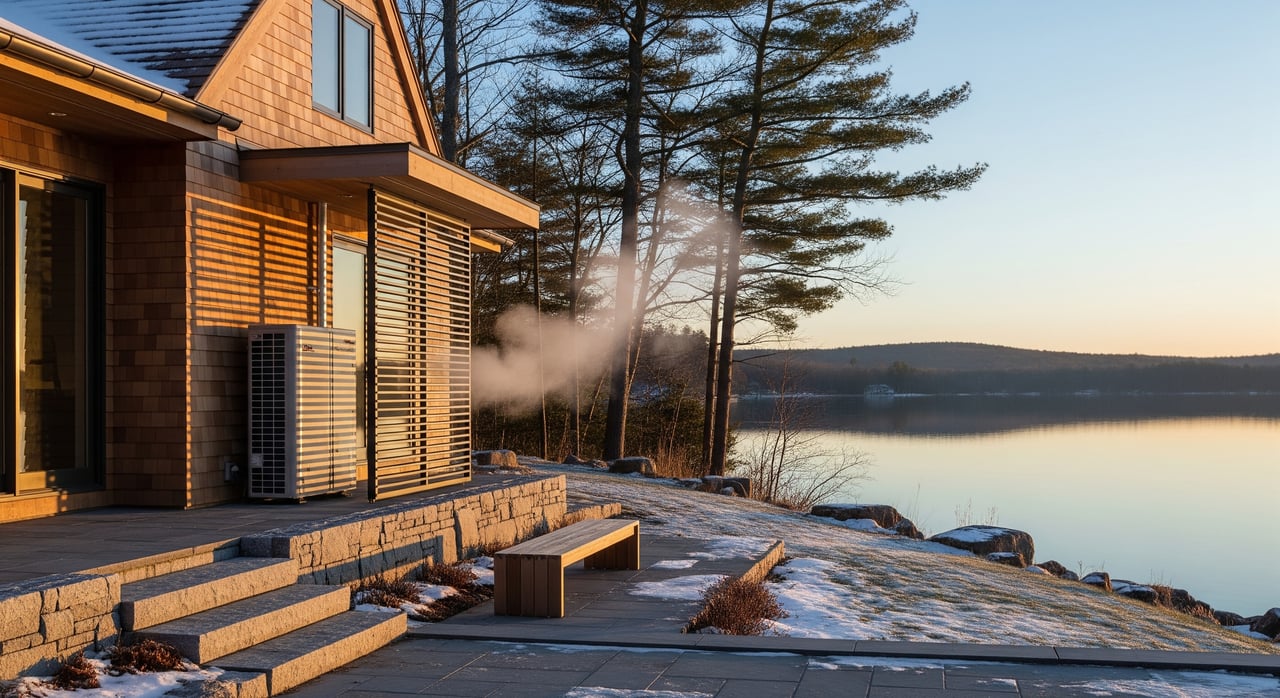
Lakefront homes face drifting snow and strong winter winds. Ask your installer to mount the outdoor unit on a stable, elevated pad above typical snow levels and to site it out of prevailing storms while ensuring clear airflow. Keep it away from roof edges where ice can fall. Anti-corrosion features and proper clearances help the unit last and perform.
Noise and neighbors
Outdoor units produce sound while running and can be briefly louder during defrost cycles. You can reduce sound impact by locating the unit away from bedroom windows, using anti-vibration mounts, and adding thoughtful screening or landscaping. Ask your installer to share the model’s decibel ratings and mitigation options.
Power and backup heat
Many projects need a dedicated circuit and sometimes a panel upgrade, especially for larger whole-home systems. Plan for an electrician’s assessment during quoting and decide on a backup heat plan that fits your home and comfort preferences. If you have an existing oil or propane system, keeping it for the coldest nights is a common approach.
Seasonal or second homes
Some incentive programs limit benefits to primary residences. For example, Efficiency Maine’s geothermal rebates reference principal residence requirements. If your Sebago property is seasonal or a second home, confirm eligibility before relying on rebates by reviewing the program’s geothermal page, then check the current heat pump program rules.
What this means for buyers and sellers
For buyers, a cold-climate heat pump offers efficient heating and quiet, zoned cooling in summer, which is ideal for lakeside living. Maine reporting points to sizable bill reductions when switching from oil or propane, with some analyses noting savings up to 60 percent, depending on rates, usage, and the home’s envelope. See recent reporting on potential savings in Maine.
For sellers, a well-installed, NEEP-listed system can boost year-round comfort and market appeal, especially when paired with clear documentation of equipment, warranties, recent electric bills, and any transferable rebates or credits. If your home is on the water, include a note on siting compliance with Sebago’s shoreland ordinance to reassure buyers.
Your step-by-step checklist
- Start with a heating load estimate or energy audit to size the system correctly.
- Confirm whether the property is your primary residence if you plan to use income-based or residence-specific incentives.
- Get multiple quotes from experienced cold-climate installers and ask for NEEP-listed model options.
- Ask each installer to show performance at your local winter design temperature and to detail electrical work, backup heat strategy, and sound mitigation.
- Review Sebago’s shoreland setbacks and get Code Enforcement input before you pick an outdoor unit location.
- Verify current Efficiency Maine rebates and federal credit deadlines before signing, and keep dated invoices for tax filing.
Ready to map out the best approach for your Sebago home, whether you are buying, improving, or preparing to sell? Let’s talk through comfort, compliance, and resale strategy. For tailored guidance, reach out to Colin Harvey.
FAQs
Are heat pumps effective for Sebago’s sub-zero nights?
- Yes, many cold-climate models on the NEEP list are designed to maintain useful capacity at low temperatures, with backup or hybrid strategies recommended for the coldest snaps.
What Maine rebates can I use for a heat pump in 2025?
- Efficiency Maine offers per outdoor unit rebates that vary by income tier, with example amounts of 1,000, 2,000, or 3,000 dollars and household caps; confirm current program rules before you commit.
Do federal tax credits still apply and when do they end?
- Certain residential credits are available for qualifying equipment placed in service on or before December 31, 2025, subject to IRS guidance and filing on Form 5695.
Do I need a permit to place a heat pump near Sebago Lake?
- Shoreland setbacks often apply within 100 or 75 feet of the water, and powered equipment can trigger review; consult Sebago’s Code Enforcement Officer before siting your condenser.
Will adding a heat pump help my home’s market appeal?
- Buyers value efficient, year-round comfort, especially with documentation of performance, energy bills, and compliant lakeshore placement; while every home is different, this often enhances buyer confidence.