If your ideal Maine property starts with the boat, not the house, the Sebago Lakes Region deserves a closer look. This is a market where open water, protected coves, marina access, and local mooring rules can shape your day-to-day experience just as much as square footage or finishes. If you are weighing a waterfront purchase here, understanding how boating actually works around Sebago can help you choose more confidently. Let’s dive in.
Why Sebago appeals to boat-first buyers
Sebago Lake stands apart because it offers scale and variety in the same setting. Official tourism sources describe it as Maine’s second-largest lake at about 45 square miles, with more than 105 miles of shoreline, plus a mix of open water, coves, and forested inlets. For you as a buyer, that means one shoreline can feel active and exposed while another feels quieter and more tucked away.
The boating lifestyle also extends beyond one lake. Sebago connects into a broader network through Brandy Pond, Long Lake, and the Songo River and Lock corridor. That connected system gives you more range for day boating, dining runs, and exploring different parts of the region without trailering from place to place.
The surrounding towns support that lake-first pattern. Sebago’s comprehensive plan notes that much of its commercial activity is tourism related, including marinas, cottages, restaurants, small stores, and summer camps, with development concentrated near lake shores and much of the rest of town remaining forested and lightly developed. In Raymond, the town reports a year-round population of 4,436 that rises to about 12,000 seasonally, which reflects a strong recreation-driven market.
Boating access shapes property value
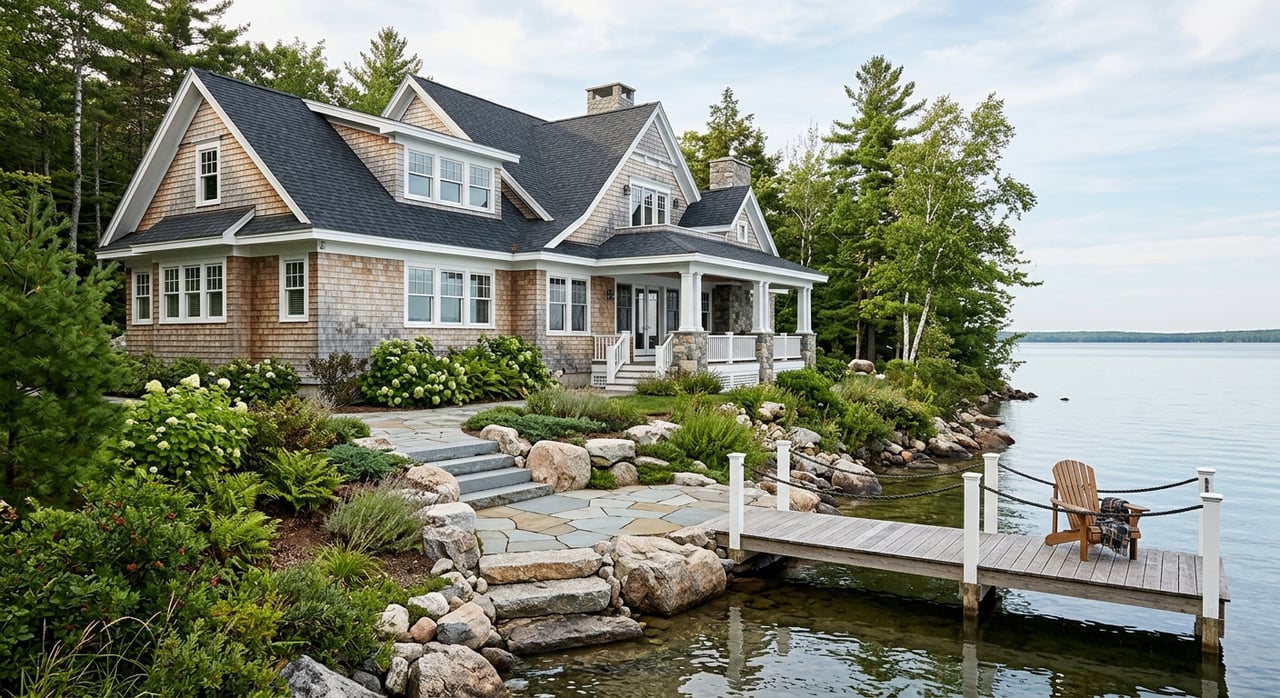
In the Sebago Lakes Region, boating access is not one-size-fits-all. Two homes with similar waterfrontage can live very differently depending on whether you can secure a mooring, install a compliant dock, join a shared-access setup, or rely on a marina slip. That is why buyers here should think beyond the shoreline itself.
In practical terms, most boat-first purchases tend to fall into three models:
- Direct waterfront with usable mooring or dock rights
- Association or right-of-way access with shared slips or mooring fields
- A nearby home that depends on marina slip, mooring, or valet storage arrangements
Each model can work well, but each creates a different ownership rhythm. The right fit depends on how often you boat, your boat size, your tolerance for seasonal logistics, and whether you want private frontage or service-oriented convenience.
Where marina infrastructure is strongest
Sebago town marinas
Sebago offers a mix of quieter and more open-lake boating setups. The town business directory lists Sebago Lake Marina and Long Beach Marina among its boating-related businesses, which helps show where service infrastructure is concentrated.
Sebago Lake Marina emphasizes a sheltered setting away from wind and waves, with slip rentals typically running from mid-May to early October and a maximum boat length of 24 feet. Long Beach Marina presents a different experience, marketing itself as an open-lake marina with moorings, shuttle service, a launch ramp, and a full-service fuel dock.
Naples and Brandy Pond
If you want the most marina-intensive part of the region, Naples and the Brandy Pond corridor are hard to ignore. Causeway Marina sits on Brandy Pond between Long Lake and Sebago Lake and highlights a fuel dock, slips, repairs, storage, towing, and rentals.
Moose Landing Marina adds even more scale, with 15 acres, 1,000 feet of frontage on Brandy Pond, access to Long and Sebago Lakes, 200 deep-water slips, a launch ramp, and a double-sided fuel dock. For buyers who want a more social, service-rich boating environment, this part of the system often stands out.
Raymond and Jordan Bay
Raymond is another major service hub, especially around Jordan Bay. Port Harbor Marine reports that Jordan Bay Marina includes 50 wet slips for boats up to 34 feet, 150 valet-storage slots, and a fuel dock.
Raymond planning materials also point to ongoing marine service activity in the Jordan Bay area. That helps explain why some stretches of shoreline here feel more active and infrastructure-oriented than a purely residential cove.
Standish and protected coves
Standish offers a calmer version of boat access. Sebago Lake Lodge describes a protected basin on the southeast corner of Sebago Lake with seasonal docking for boats up to 27 feet, slips with and without electricity, and a small number of moorings.
If your version of lake life leans more toward quieter mornings and protected docking conditions, this kind of cove setting may be worth special attention. Not every buyer wants to launch straight into heavier open-water exposure.
Public launching and day-use access
Public access matters even if you plan to buy waterfront. It affects seasonal traffic patterns, launch convenience, and the overall feel of nearby shorelines.
Sebago Lake State Park in Casco and Naples offers beaches, camping, and a boat launch. The park’s Songo Lock information also includes operating hours and a round-trip boat passage fee, which matters if you plan to use the connected corridor between lakes.
Sebago’s comprehensive plan notes that the town beach and boat landing sit at the mouth of the Northwest River in East Sebago, and that the town also maintains a boat ramp at Peabody Pond. Areas near public launch sites can be useful for access and recreation, but they often feel different from a more private dock-centered shoreline.
Local rules can change your options
One of the biggest surprises for out-of-area buyers is that mooring and dock rules are often handled locally. Maine’s boating guidance says the state generally does not control moorings on inland waterways, so you need to check with the municipality where the property is located.
That means two homes on the same lake can face different rules if they sit in different towns. Before you buy, it is worth confirming what is allowed, what is grandfathered, and what requires annual renewal or permit review.
Sebago dock standards
Sebago’s shoreland ordinance sets a clear baseline for docks. A temporary non-commercial dock cannot be wider than six feet, and new permanent piers or docks on non-tidal waters are not allowed unless the applicant shows a temporary structure is not feasible and obtains the required DEP permit.
For many buyers, that means a large private dock may not be as simple as it looks on paper. In Sebago, it is often smarter to evaluate a property based on existing rights, existing structures, and realistic permitting pathways rather than assumptions.
Naples mooring rules
Naples takes a more detailed approach. According to the town’s harbor-master page, as a general rule only one mooring is allowed per lot with at least 50 feet of owned, direct waterfront frontage, unless a mooring field is assigned to an association or campground through a deeded right-of-way and approved by the harbor master.
Naples also says moorings must be renewed annually, removed by December 1, and kept within the 200-foot water-safety zone. The town further states that rental of moorings is prohibited, which can be important if you are comparing private ownership to flexible marina arrangements.
Raymond mooring approach
Raymond is much less prescriptive at the local level. The town’s mooring handout says Raymond does not currently have any mooring ordinance or regulations and instead points owners back to state guidance, including the 200-foot water-safety zone and blue-striped mooring ball standard.
For buyers, that does not mean fewer questions. It simply means the framework is different, so due diligence still matters.
How different shoreline areas feel
Naples feels active and social
Naples village and the Brandy Pond and Songo Lock corridor tend to be the region’s most active boating areas. The town describes numerous campgrounds, marinas, seasonal rentals, and recreation-oriented businesses, and the nearby marina concentration reinforces that atmosphere.
If your ideal day includes pulling away from a slip, spending time on connected water, and moving easily from boating to dining or village activity, this area fits that pattern well. It is best understood as a marina-to-open-water district with steady seasonal energy.
Raymond feels marina-centered
Raymond’s east shore has a different rhythm. The town’s parks page notes that Tassel Top Beach sits on 35 acres on the east shore of Sebago Lake, while the town office highlights the area’s recreation-based tourism and large seasonal population increase.
Tassel Top does not have a boat launch, so the boating activity here comes more from nearby marinas, beaches, and private frontage than from a heavy public launch pattern. For some buyers, that creates a useful middle ground between active and private.
Sebago offers contrast within one town
Sebago itself is more mixed. The town’s main commercial pockets are East Sebago, North Sebago, and Long Beach, while the shoreline also includes marinas, cottages, and more lightly developed stretches.
That variety shows up in the boating experience. One setting may offer more sheltered water and a cottage feel, while another puts you closer to open-lake exposure and marina activity.
Standish feels quieter
Standish’s basin area is one of the clearest examples of a calmer boating pocket. The protected cove setting and seasonal docking profile point to a quieter style of use that can appeal to buyers who value ease and shelter over constant activity.
If you picture early departures, less chop at the dock, and a more relaxed seasonal rhythm, protected coves like this can be especially attractive.
Boat-first questions to ask before you buy
Before making an offer, it helps to look at a property through a boating lens instead of just a housing lens. A beautiful shoreline does not always equal easy ownership.
Ask questions like these:
- Is there direct frontage, deeded access, or shared access?
- Is there an existing dock or mooring, and is it compliant with local rules?
- If there is no private setup, what marina options are nearby?
- What is the seasonal availability for slips, moorings, or valet storage?
- Does the shoreline sit on open water or in a protected cove?
- Are there nearby public launch sites that may affect traffic patterns?
- What town-specific rules apply to docks, moorings, and seasonal removal?
For many buyers, these answers are what separate a good lake house from the right lake house.
Choosing the right Sebago lifestyle
Boat-first living around the Sebago Lakes Region is less about finding one perfect map pin and more about matching your property to your boating habits. Some buyers want open water and a fuel dock nearby. Others want a protected cove, a manageable seasonal dock, and a quieter stretch of shoreline.
That is what makes Sebago so compelling. You can find active marina districts, mixed-use village-adjacent shorelines, quieter cottage pockets, and connected cruising routes all within the same broader lake system.
If you are considering a waterfront home, second home, or lake-area property in Sebago, Cumberland, or the surrounding Sebago Lakes towns, working through access, infrastructure, and local rules early can make the entire search more precise. If you want help evaluating a property through that lens, connect with Colin Harvey for tailored guidance on Sebago-area waterfront opportunities.
FAQs
What makes Sebago Lake appealing for boat-first living?
- Sebago Lake offers both broad open water and quieter coves, plus access to a connected boating system through Brandy Pond, Long Lake, and the Songo River and Lock corridor.
What are the main boating property options around Sebago?
- Most buyers choose between direct waterfront with dock or mooring rights, shared association or right-of-way access, or homes that rely on nearby marina slips, moorings, or valet storage.
What should buyers know about mooring rules in Naples, Maine?
- Naples generally allows one mooring per lot with at least 50 feet of owned direct waterfront frontage, requires annual renewal, requires removal by December 1, and prohibits mooring rentals.
What should buyers know about dock rules in Sebago, Maine?
- Sebago limits temporary non-commercial docks to six feet in width, and new permanent piers or docks on non-tidal waters are not allowed unless a temporary structure is not feasible and the required DEP permit is obtained.
Where is marina infrastructure strongest in the Sebago Lakes Region?
- Strong boating infrastructure is concentrated in Sebago town, Naples and Brandy Pond, Raymond’s Jordan Bay area, and select protected cove settings in Standish.
How does Raymond, Maine handle moorings on Sebago Lake?
- Raymond says it does not currently have its own mooring ordinance or regulations and instead refers owners to applicable state guidance, including the 200-foot water-safety zone.
What statewide boating rules matter near Sebago waterfront homes?
- Motorized watercraft on inland waters must display the Lake and River Protection sticker, and boaters must operate at headway speed within 200 feet of shorelines and within marinas or approved anchorages.